


 Croatia
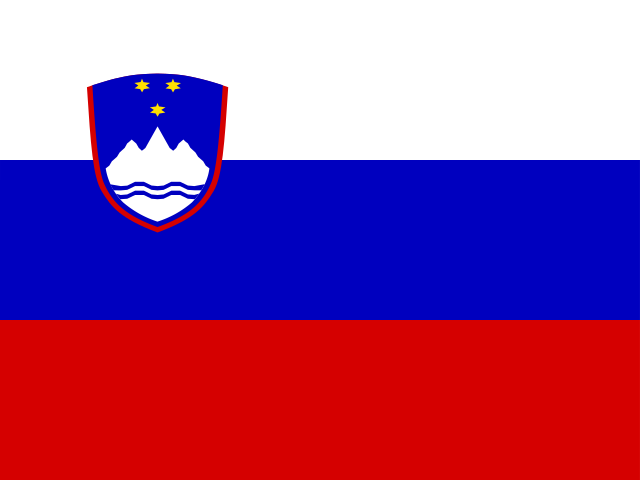 Slovenia
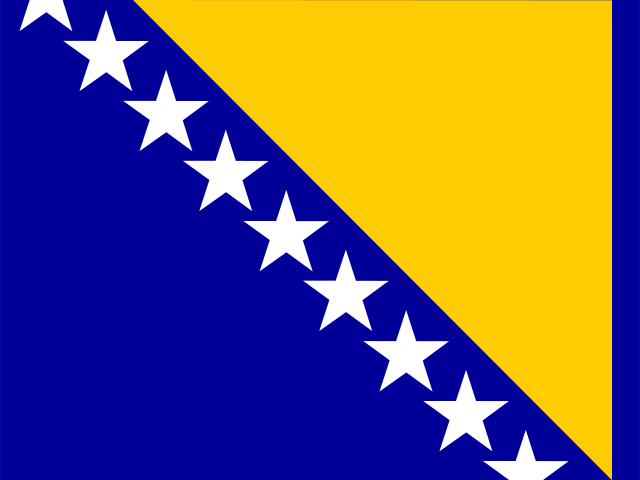 Bosnia and Herzegovina
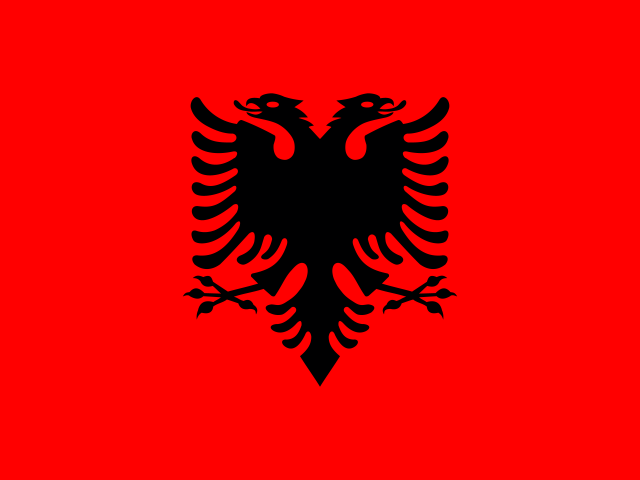 Albania
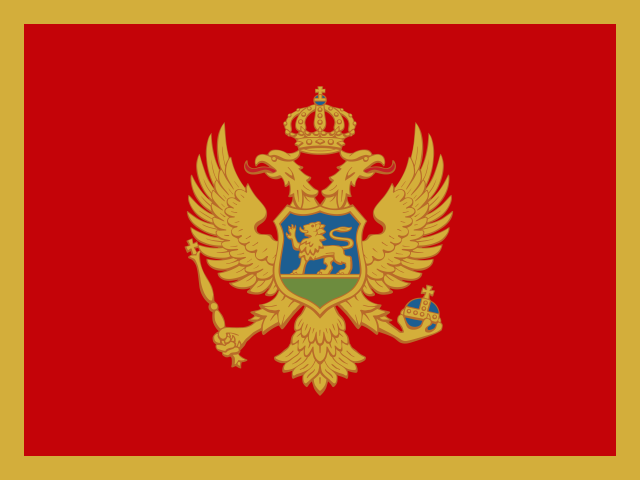 Montenegro
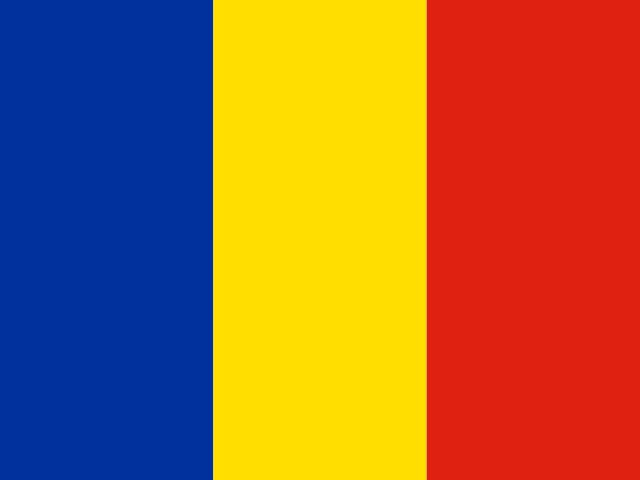 Romania
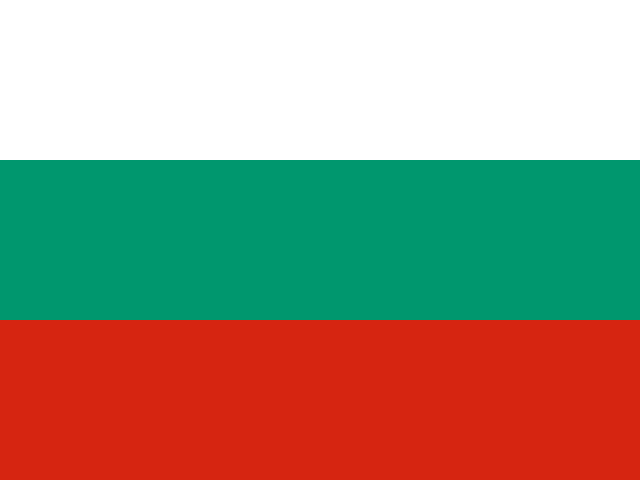 Bulgaria
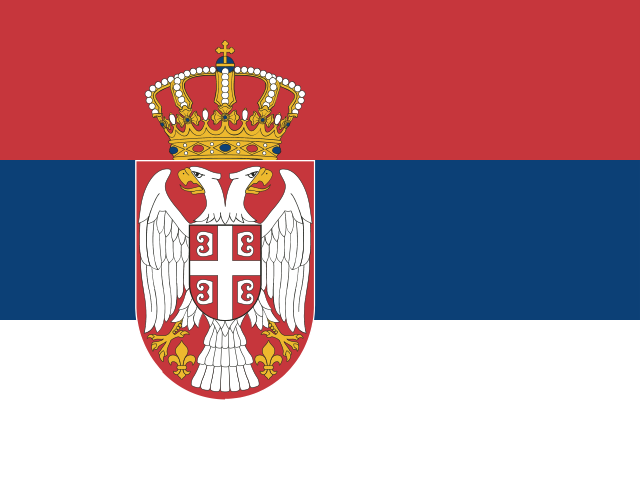 Serbia
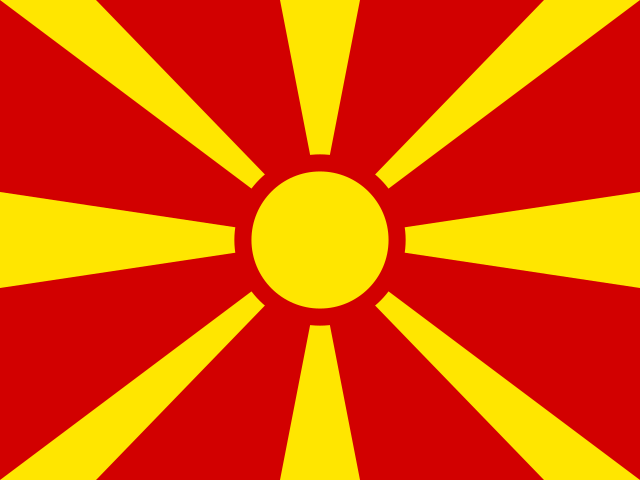 North Macedonia
 Kosovo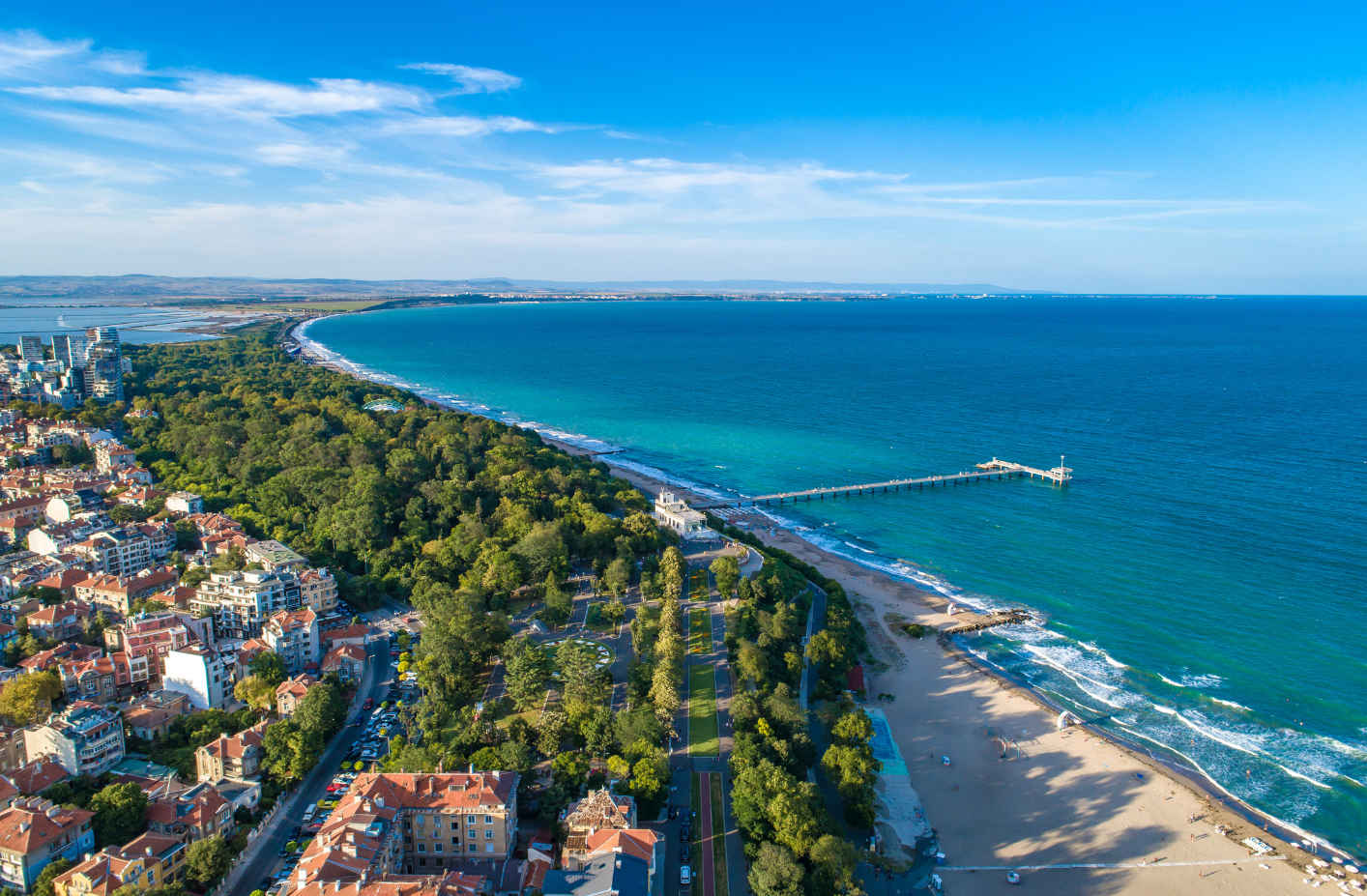
Burgas: Your Guide to Bulgaria’s Sunny Seaside Eurovision 2027 Host City
When Bulgaria won the Eurovision Song Contest, most fans assumed the 2027 edition would land in the capital, Sofia. Instead, the honour has gone to Burgas, the country’s fourth-largest city, located on the Black Sea coast, which is still largely unknown outside Bulgaria.
Every May, this laid-back resort town swaps its usual crowd of domestic beachgoers for sunbathers from across Europe. Come May 2027, it’ll be swapping them again, this time for tens of thousands of Eurovision fans from across the continent. The semifinals will be on the 11th and 13th of May, with the final on the 15th of May 2027 at Arena Burgas.
Whether you’re coming purely for the contest or want to build a full seaside holiday around it, here’s everything you need to know about getting to Burgas, where to stay, what to see, and what to eat.
How to Get to Burgas
Burgas has its own airport just a few kilometres from the centre, but depending on where you’re flying from, you might find better connections through Bulgaria’s other two major airports.
Burgas Airport (the closest option)
Burgas Airport is served by Wizz Air, Ryanair, Eurowings, Jet2, and Transavia, along with seasonal charter flights, with direct routes from Germany, France, Austria, Poland, and the United Kingdom.
If you’re coming from Sofia, Bulgaria Air runs a daily connecting flight that takes around 40 minutes. Once you land, a regular bus service links the airport to the city centre, and taxis are readily available too.
Varna Airport (the second-closest option)
If Burgas Airport doesn’t have a convenient route for you, Varna (home turf of Dara, Bulgaria’s 2026 Eurovision winner) is worth checking. Varna Airport is served by Wizz Air, Ryanair, Eurowings, Bulgaria Air, Turkish Airlines, Austrian Airlines, and Air Serbia, with flights arriving from Germany, France, Austria, Poland, the UK, the Netherlands, Hungary, Belgium, Serbia, and Turkey.
From Varna, you can rent a car or book a private transfer for the roughly 140km, 2 to 2.5-hour drive down to Burgas. If you’d rather skip the driving, minibuses depart from Varna’s central bus station roughly every hour and cost around €11.
Sofia Airport (the capital city option)
Sofia Airport has by far the widest range of international connections, with airlines including Wizz Air, Ryanair, Eurowings, Bulgaria Air, Turkish Airlines, Austrian Airlines, Air Serbia, Lufthansa, Transavia, LOT, British Airways, Pegasus, and Air Baltic, plus charters, bringing in flights from across Europe, from Italy and Spain to Greece, Ireland, Denmark, Switzerland, Czechia, and Malta.
From Sofia, you have several options for the roughly 400km journey to Burgas:
- Fly with Bulgaria Air daily for about 40 minutes.
- Drive or take a private transfer for around 4 to 4.5 hours.
- Take the bus from Sofia Central Bus Station. There are about 10 departures a day, with prices starting from €18.80 and taking 4.5–5 hours.
- Take the train from Sofia Central Train Station. The fastest service takes around 5 hours 45 minutes, with tickets starting from €12.
Getting around once you’re there
Burgas itself is easy to navigate. The local Burgasbus network covers the city well, and e-bike rentals are widely available if you’d rather explore at your own pace along the seafront.
Where to Stay in Burgas
As a long-standing Black Sea holiday town, Burgas already has a solid base of hotels and apartment rentals for summer tourists. Even so, expect demand and prices to skyrocket well above the usual summer levels once Eurovision 2027 rolls into town, so it’s worth booking early.
Outside of peak Eurovision demand, private rooms can go for as little as €45–50 a night, solid four-star hotels start from around €85–100, and even a splurge at a five-star beachfront property can come in well under what you’d pay in a major Western European capital.
If accommodation in Burgas itself does sell out, consider the nearby resort towns of Pomorie, Sunny Beach, Saint Vlas, Elenite, Nessebar, Ravda, Sozopol, and Ravadinovo. All of them are popular with tourists in their own right and are well connected to Burgas by regular public transport.
What to Do in Burgas
Eurovision aside, Burgas has plenty to fill the hours between concerts.
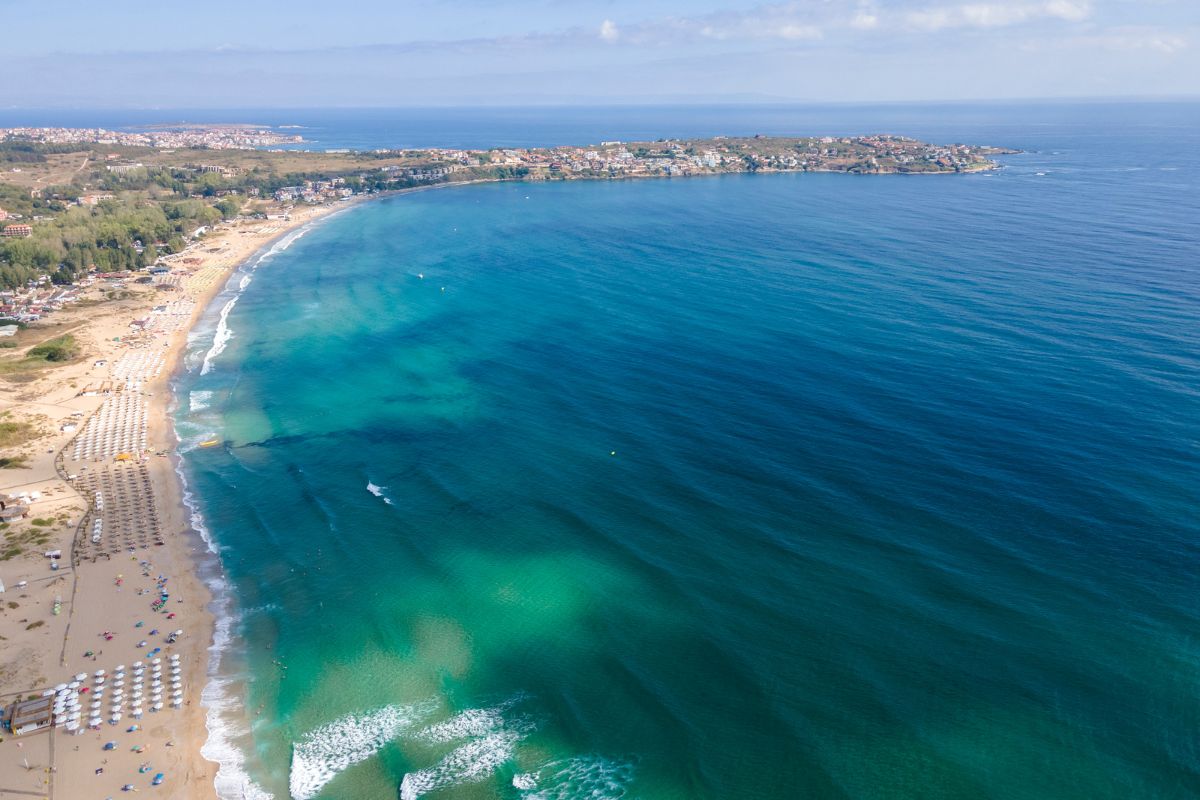
Hit the beaches in and around Burgas
May weather in Burgas is typically sunny and warm, though the Black Sea itself likely won’t be warm enough for a proper swim just yet. Think sunbathing and seaside strolls rather than a dip.
- Central Beach and Northern Beach are the buzzy options, lined with restaurants and bars.
- Sarafovo Beach and Kraymorie Beach offer a quieter, more natural alternative.
- Sunny Beach, Nessebar, and Sozopol all have long stretches of golden sand and are reachable by regular, affordable public transport.
- If you have a rental car, head south of the city to the beaches at Gradina and Smokinya.
Explore more of Bulgaria’s beaches →
Walk or cycle the Sea Garden and city center
The Sea Garden is a five-kilometre stretch of paved walking and cycling trails through a sprawling public park, home to exotic plant species, cultural monuments, and some striking examples of Balkan architecture.
Burgas’s pedestrianised Old Town is packed with restaurants, bars, and shops, and is home to the Orthodox Church of Saints Cyril and Methodius. There’s plenty more to explore beyond that, such as museums, the lighthouse, the Arch of St. Nicholas the Wonderworker, the Pantheon of the Fallen Antifascists, and more.
Visit Chengene Skele
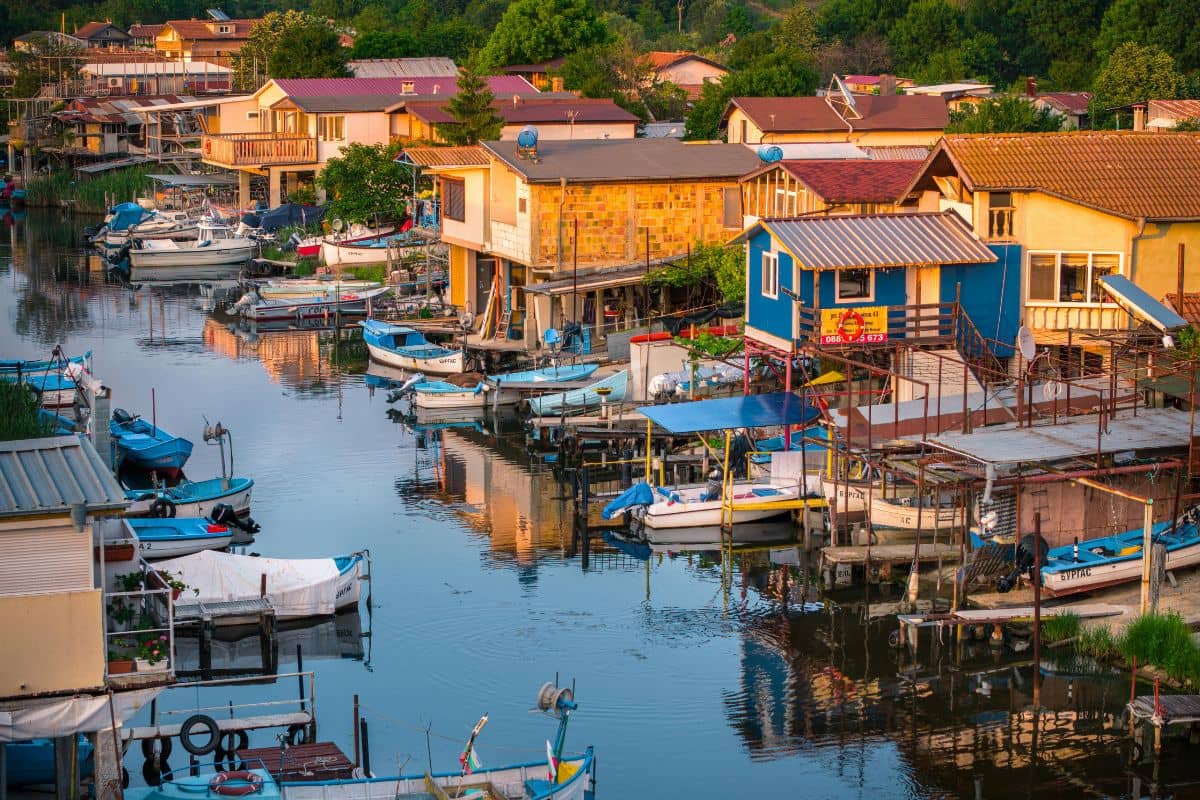
Fifteen kilometres south of the city, Chengene Skele is an authentic working fishing hamlet, with small boats, quiet canals, seaside tavernas, and a strong dose of local folklore. It’s a good antidote to the bigger crowds in central Burgas.
Watch the sunset from the Pier of Burgas
After a day at the beach, the Pier of Burgas is the spot to be. It offers sweeping views back over the city and is one of the best places in town to watch the sun go down.
Meet the peacocks (and capybaras) at Burgas Zoo
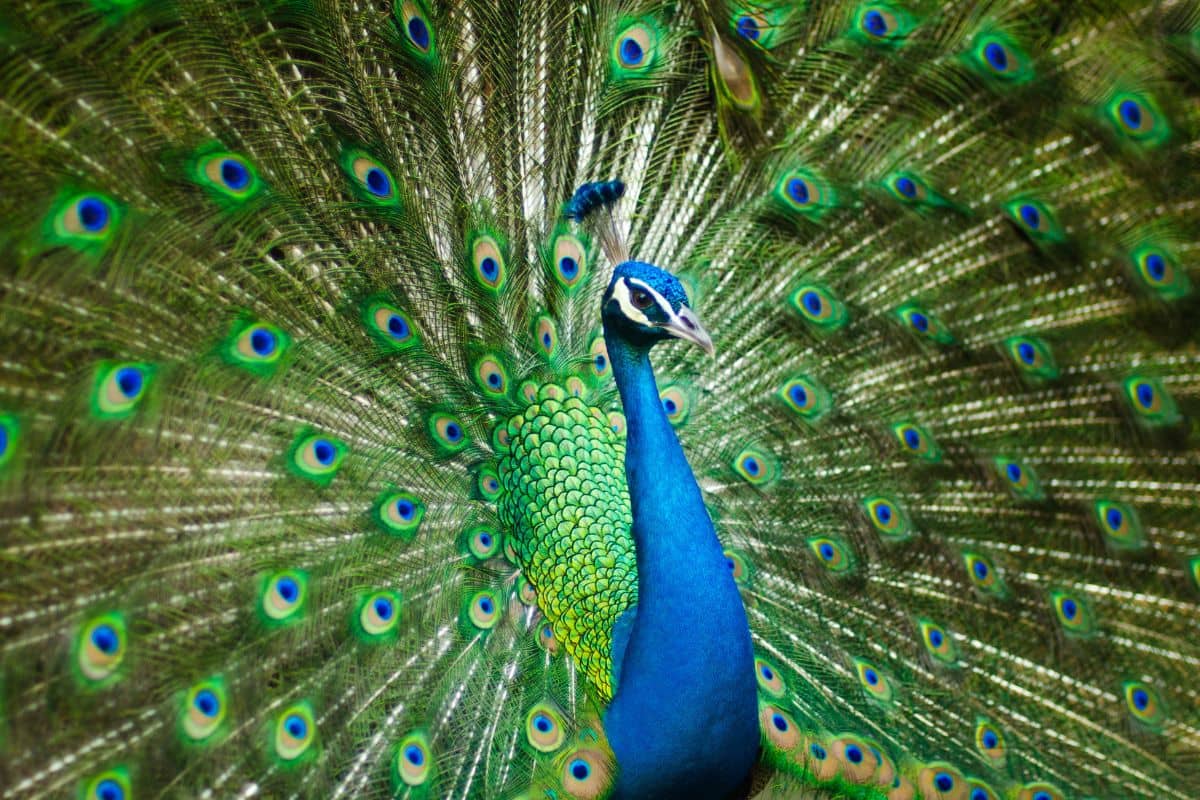
A short trip from the centre, Burgas Zoo is a pleasant stop if you’re travelling with kids or just enjoy animals. It’s home to Europe’s largest collection of peacocks: over 320 birds from 29 different species. All of them roam the grounds freely, alongside a growing cast of other residents, including lemurs, marmosets, and wolves.
The capybaras are a particular crowd favourite these days, drawing plenty of visitors purely for the chance to see the world’s largest rodents up close. Dedicated contact zones let visitors get hands-on with friendlier animals, and the zoo is open daily from 8 am to 8 pm.
Get up close with vintage aircraft at the Aviation Museum
Out by Burgas Airport in the Sarafovo district, the Burgas Aviation Museum is built around ten historic aircraft that visitors can actually climb inside to explore, alongside a set of flight simulators for anyone who wants to try their hand at piloting.
It’s the successor to an aviation exhibition first opened in 1998, and makes for an easy, family-friendly stop if you’re near the airport anyway. It’s open daily from 9 am to 8 pm in summer (June to September), and Wednesday to Sunday, 9 am to 5 pm, the rest of the year.
Explore Burgas Saltworks
Just outside the city, the Burgas Saltworks are a set of ancient salt-evaporation lagoons that double as a haven for wildlife, such as flamingos and pelicans, which are regularly spotted here, alongside pink salt pans and pools of mineral-rich healing mud.
Take a boat out to St. Anastasia Island
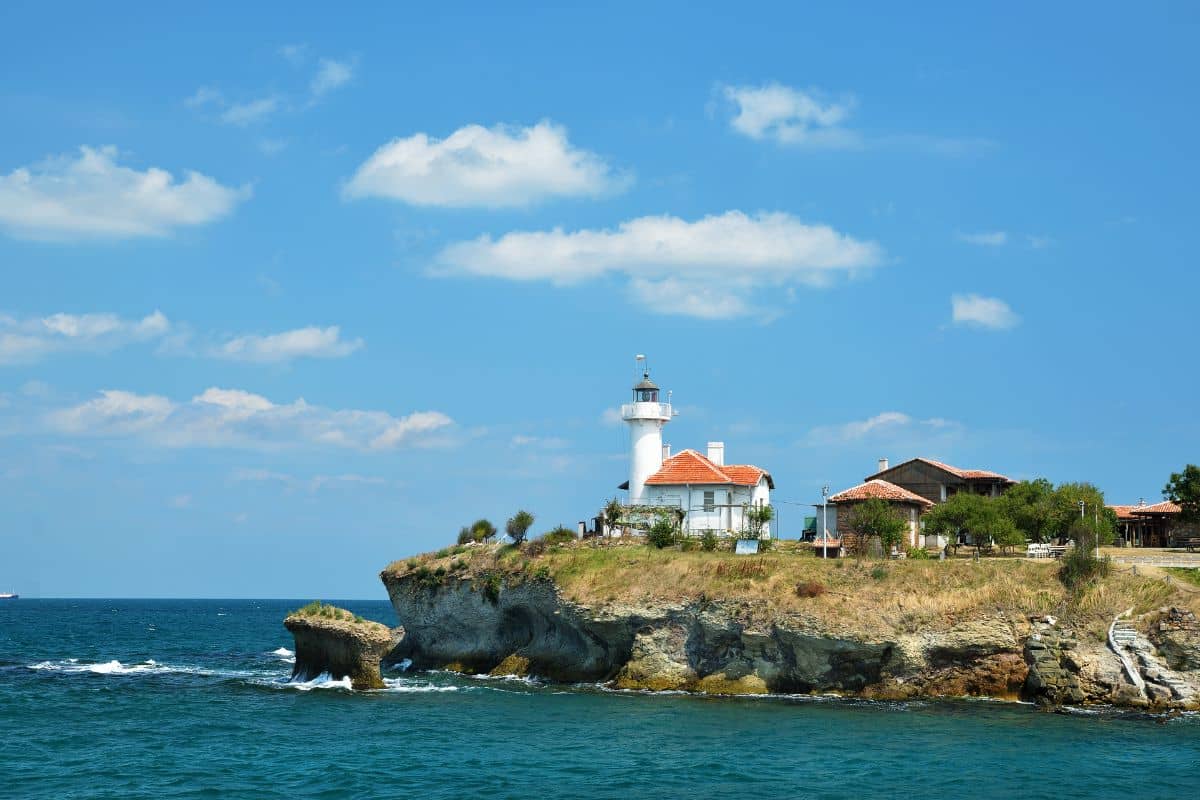
St. Anastasia Island is the only inhabited island on the Bulgarian Black Sea coast, sitting in the Bay of Burgas about 1.5km offshore.
Formed of volcanic rock, it’s home to the only surviving island monastery in Bulgaria, dedicated to St. Anastasia the Healer, along with a 19th-century lighthouse. The island’s more turbulent past includes a stint as a political prison in the 1920s and 1940s.
Today it’s a polished little tourist spot, with an interactive museum on local pirate legends, a restaurant serving fish dishes and old monastic recipes, a small café, and even a guesthouse if you fancy staying the night in a converted monastic cell.
Boats depart from Magazia 1 at the Port of Burgas three times a day, with the crossing taking about 30 minutes each way and roughly two hours to explore once you’re there. A standard round-trip ticket costs around €9.50, with museum admission an extra €3 on top. Sailings depend on the weather, so it’s worth calling ahead to confirm before you head to the port.
Day-trip to the Old Towns of Nessebar and Sozopol
Both towns pair ancient ruins with the distinctive wooden houses of the Bulgarian National Revival period. Nessebar’s Old Town is a UNESCO World Heritage Site, and both are easily reached from Burgas by public transport (round-trip tickets for €8-10), ideal for a half-day or full-day trip.
View this post on Instagram
Step back in time at Aquae Calidae
On the northern edge of Burgas, Aquae Calidae is a restored archaeological and thermal complex built around mineral springs that have drawn visitors since antiquity through the Thracian, Roman, Byzantine, and Ottoman eras.
Wander among genuine Roman and Byzantine ruins, walk through a virtual reconstruction of the ancient baths, and finish at the fully restored bath of Suleiman the Magnificent, now a working museum with a 3D-mapped film.
A modern aqua centre next door lets you actually bathe in the mineral waters, with hot and cold pools, a sauna, steam bath, and massage area, all set in landscaped grounds with a central mineral-water fountain and an on-site restaurant.
Uncover the mystery of the Thracian tomb in Pomorie
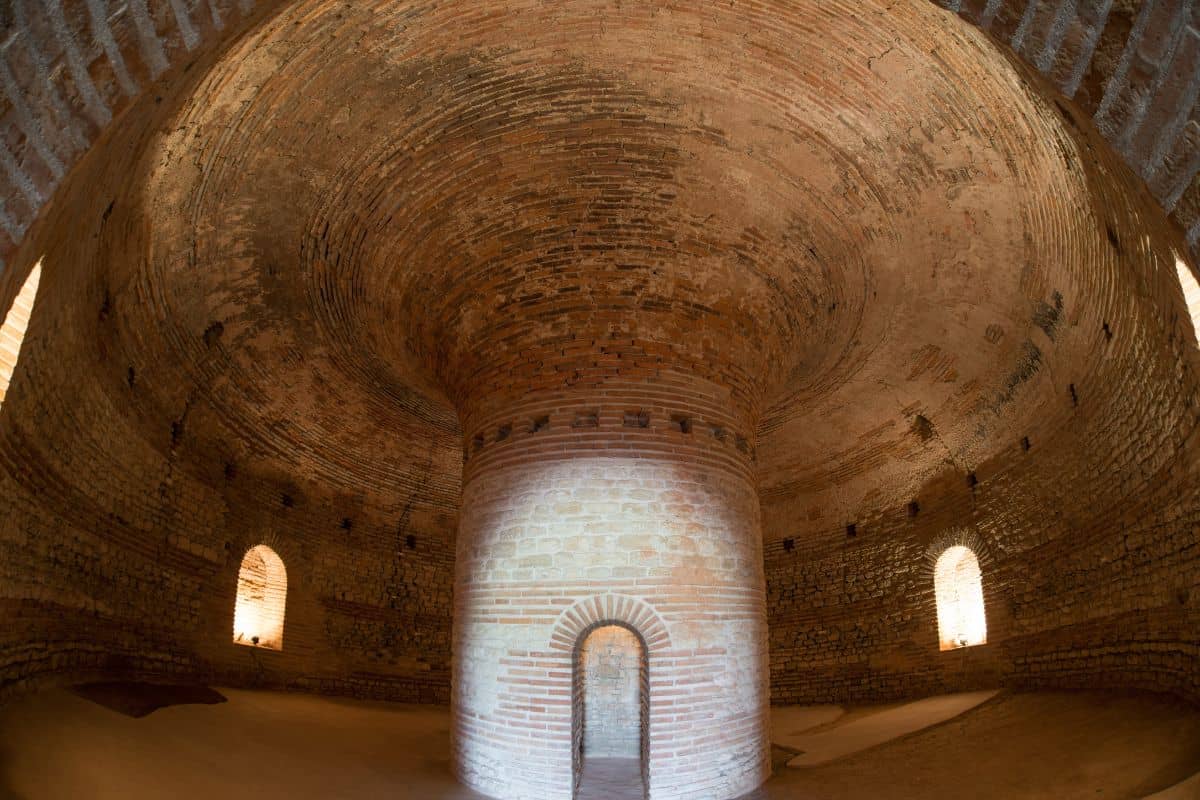
For a genuine dose of ancient history, head about 20km up the coast to the Thracian domed tomb near Pomorie, also known as the “Kuhata Mogila,” or Hollow Mound.
Dating from the 2nd to 4th century AD and hidden beneath a burial mound, it’s one of the largest and best-preserved monuments of its kind in Bulgaria, reached via a 22-metre stone corridor that opens into a circular chamber roughly 12 metres across, built around a striking hollow central column.
Archaeologists still debate exactly what it was for. Most likely a mausoleum for a wealthy local family, blending Thracian burial traditions with Roman architecture. The site is a five-minute drive from Pomorie itself and is open Tuesday to Sunday in summer, with visits by appointment only outside the summer season.
Party in Sunny Beach
If you’re after nightlife, Sunny Beach is the region’s clubbing hub, drawing large numbers of tourists for its bars and parties well into the early hours.
What to Eat and Drink in Burgas
Bulgarian food doesn’t get the international attention of some of its neighbours, but it’s well worth seeking out. And Burgas has its own coastal specialities on top of the national classics.
Coastal and local specialities
- Fresh Black Sea fish: look out for цаца (sprat), сафрид (horse mackerel), зарган (garfish), барбун (red mullet), скорпид (scorpionfish), меджит (whiting), чернокоп, паламуд (bonito), and скумрия (mackerel), typically fried, grilled, marinated, or served in a fish soup.
- “Midi po burgarski”: local mussels cooked in their shells with rice, tomatoes, onions, and herbs; one of the city’s signature dishes.
- Black Sea shrimp, also known locally as “sea cherries.”
- “Strandzhanski dyado”: a traditional cured, spiced meat named after the nearby Strandzha mountain range.
- “Strandzhanki”: open-faced grilled sandwiches topped with minced meat and kashkaval, a Bulgarian yellow cheese.
- Burgas 63: a local rakia (fruit brandy) made from grapes grown in the area.
- Burgasko: the city’s own lager, brewed locally since 1971.
National dishes and drinks worth trying too

- Shopska salad: diced tomatoes, cucumbers, onions, and peppers, topped with grated sirene (a white brined cheese).
- Banitsa: a flaky pastry, often filled with cheese and eggs, perfect for breakfast.
- Bulgarian yoghurt, famous well beyond the country’s borders.
- Lyutenitsa: a roasted pepper and tomato spread.
- Grilled meats: kyufte (flattened meatballs), kebapche (grilled minced-meat rolls), and skewers all feature heavily on menus.
- Fresh seasonal produce: May is a good month for Bulgarian strawberries, blueberries, early cherries, tomatoes, cucumbers, courgettes, spinach, and leafy greens.
- Bulgarian wines more broadly are worth exploring, including the full-bodied red Mavrud grape variety.
Check out more Bulgarian and Balkan dishes you can try in Eastern Europe →
What it’ll cost you
Burgas is refreshingly inexpensive by European standards. A restaurant meal typically runs around €20 per person, and by some cost-of-living estimates, an inexpensive sit-down meal can come in closer to €12–13, with a mid-range three-course dinner for two landing around €40.
Planning Tips
- Book accommodation early. Burgas is a summer favourite even in a normal year. With Eurovision added to the mix, rooms will go fast, and prices will climb the closer you get to May 2027.
- Pack for sun, not swimming. May in Burgas usually means warm, sunny days, but the sea itself is unlikely to be warm enough for swimming. Bring layers for the evenings by the water.
- Consider basing yourself just outside the city. If Burgas itself is fully booked, Pomorie, Sunny Beach, Nessebar, Sozopol, Saint Vlas, Elenite, Ravda, or Ravadinovo are all realistic and well-connected alternatives.
- Leave room in your itinerary for day trips. Nessebar, Sozopol, St. Anastasia Island, and Chengene Skele are all close enough for an easy half-day or full-day excursion between Eurovision events.
We have a guide with more things to know before you visit the Balkans →
Burgas may not be the Eurovision host city many people expected, but between its beaches, its Sea Garden, its saltworks flamingos, and its very reasonably priced seafood, it’s shaping up to be one worth the trip on its own merits.