

 Croatia
 Slovenia
 Bosnia and Herzegovina
 Albania
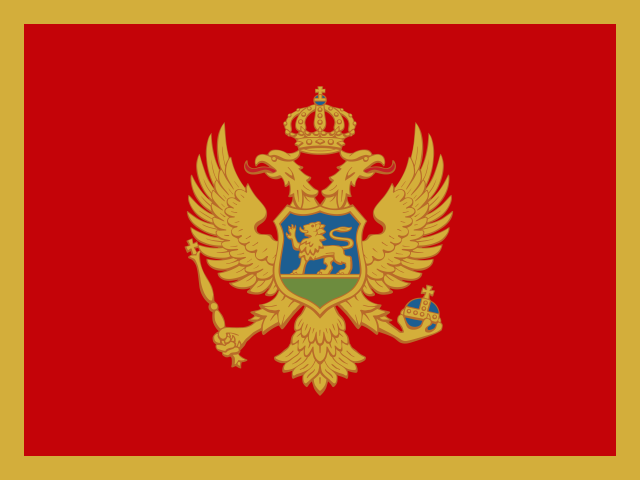 Montenegro
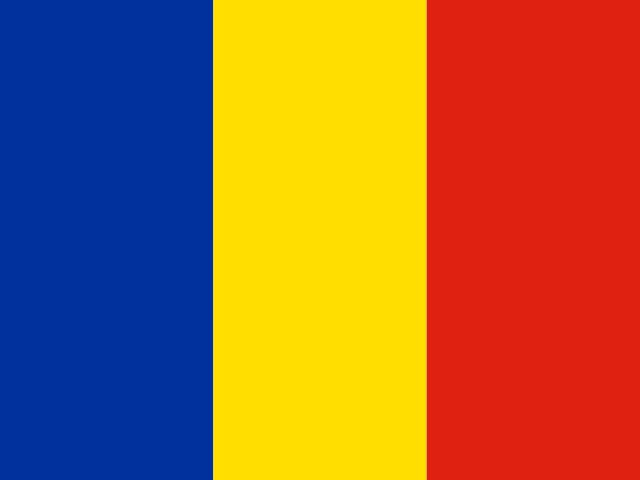 Romania
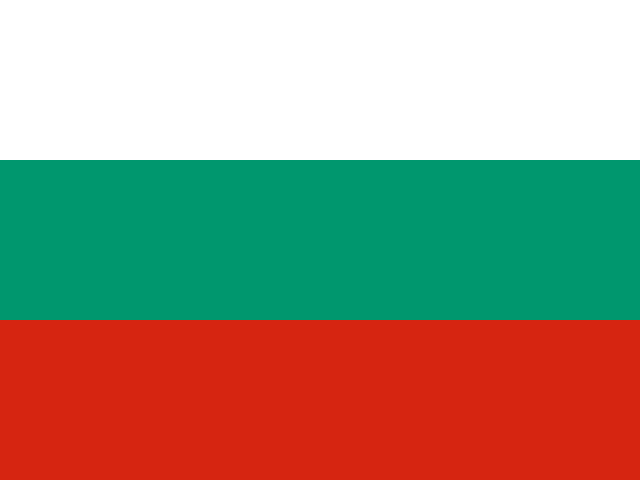 Bulgaria
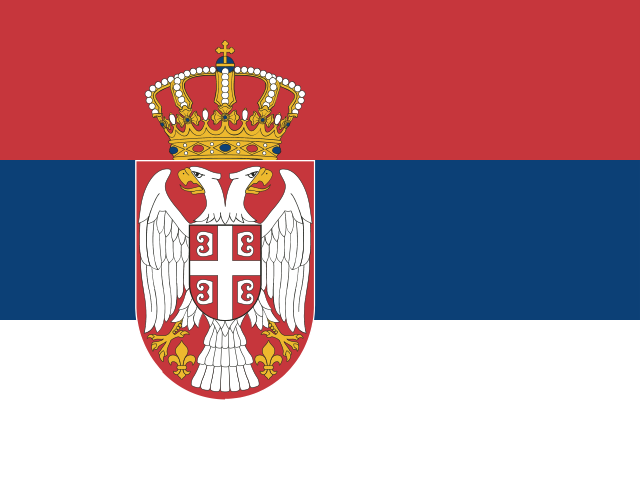 Serbia
 North Macedonia
 Kosovo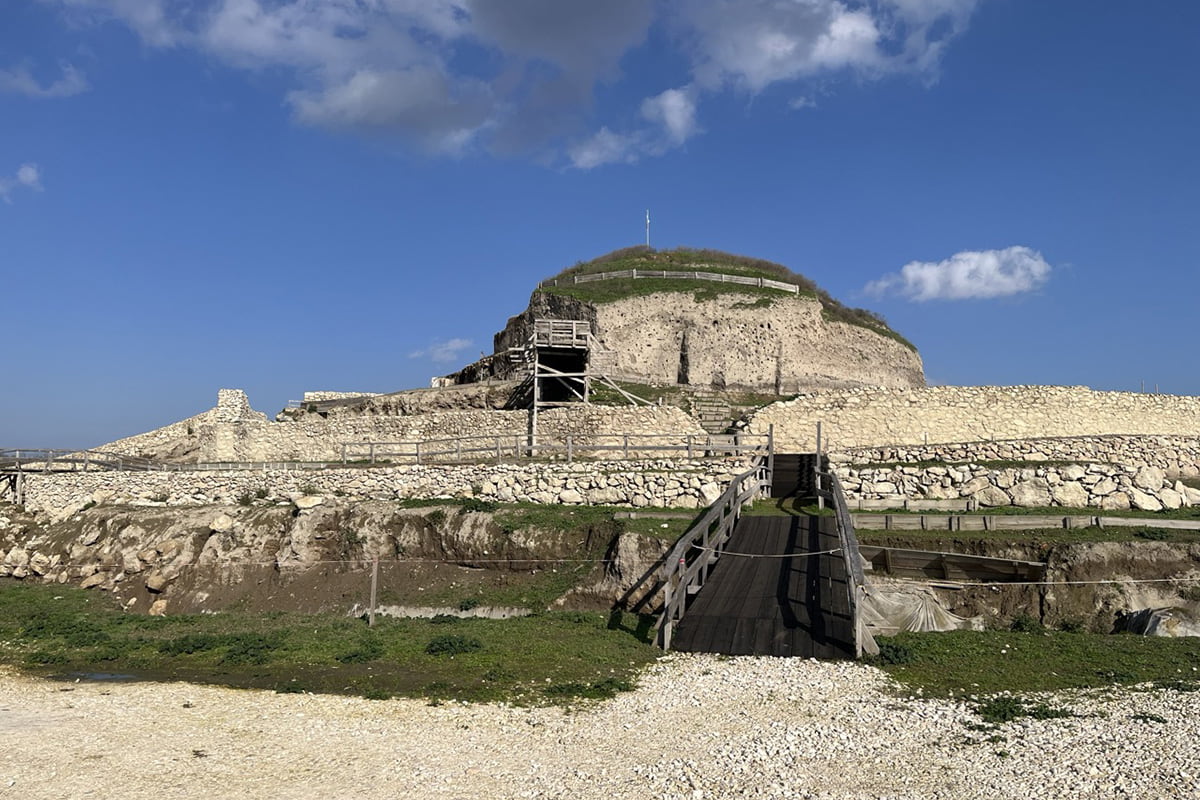
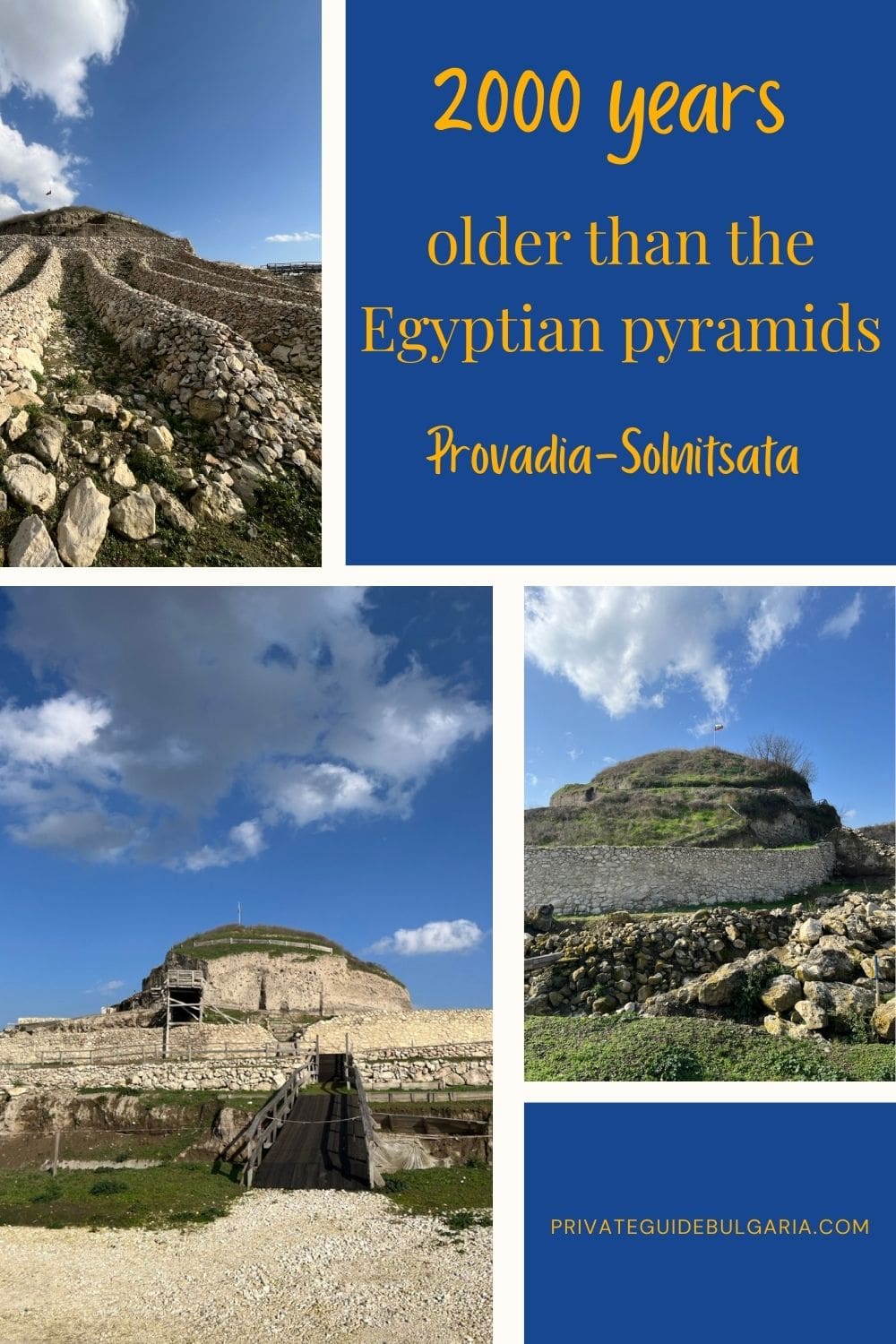
Provadia-Solnitsata: Europe’s Oldest Prehistoric Town – 2,000 Years Older Than the Egyptian Pyramids
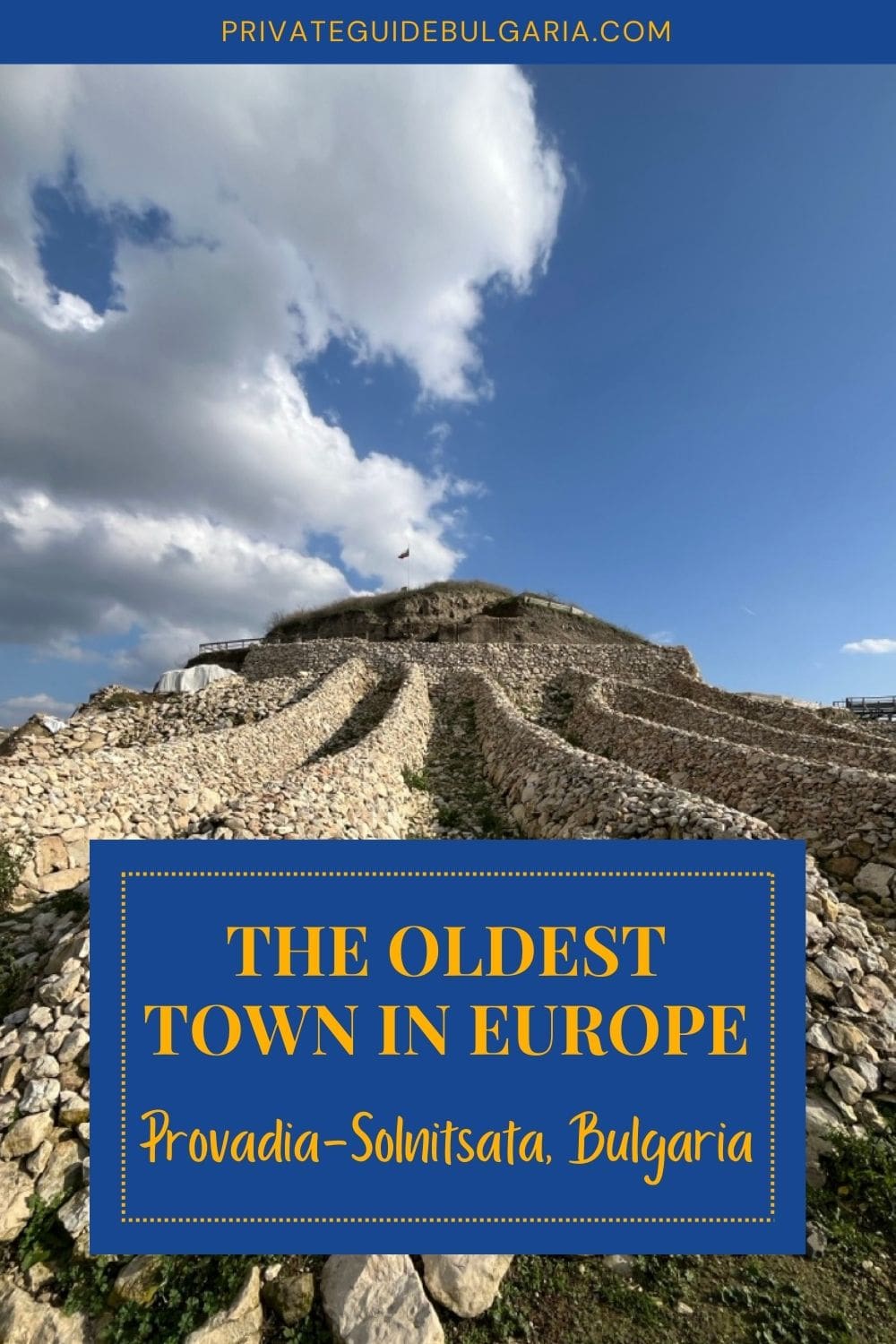
Hidden in the quiet landscapes of northeastern Bulgaria lies one of the most extraordinary archaeological sites in Europe: Provadia–Solnitsata, a settlement so ancient that it predates the Egyptian pyramids by over two millennia. Often called the oldest prehistoric town in Europe, this remarkable site offers an unparalleled glimpse into the origins of urbanization, industry, and social complexity in the Eastern Balkans.
Our team at Private Guide Bulgaria just returned from one of the most astonishing places we’ve ever visited, and we couldn’t wait to tell you about it!
Walking through this ancient settlement felt like stepping into another world. We stood inside Europe’s oldest stone fortifications, saw the remains of the continent’s earliest salt-production center, and learned how this tiny community became a thriving proto-city thanks to their “white gold.”
Disclaimer: Some links on this page are affiliate links, which means we might earn a small commission if you book through them, at no extra cost to you.
A Journey Back 7,500 Years: What Is Provadia–Solnitsata?
Provadia–Solnitsata is a prehistoric settlement complex located near the modern town of Provadia, about 50 km west of Varna. Archaeological evidence shows that it was inhabited between 5600 and 4350 BC, during the Late Neolithic and Chalcolithic periods (Copper Age).
The settlement developed around one of Europe’s earliest and most economically powerful industries: salt production.
Salt was life.
Salt was power.
Salt was money.
Because salt was essential for preserving food, maintaining bodily functions, and sustaining livestock, its producers had enormous influence. The people living in Solnitsata became wealthy and deeply connected to long-distance trade networks stretching across the Balkans and beyond.
This specialization in salt also sparked significant social and economic changes, laying the foundation for what archaeologists today consider the earliest urban-type society in Europe.
Location and Natural Uniqueness
Solnitsata is situated in a unique geological setting atop the Mirovo rock-salt deposit, which is the only such deposit in the Eastern Balkans. This enormous natural salt cone, formed under geological pressure, brought highly concentrated brine close to the earth’s surface.
Key geographical features:
- The prehistoric settlement sits at the lower bend of the Provadiyska River.
- The natural salt cone lies at depths of 12–20 meters.
- The saline zone extends over more than 4 km and reaches depths of over 15 km underground.
- Salt springs, saturated with vibrant saline solutions, flowed naturally from the deposit.
This extraordinary environment created the ideal conditions for early humans to extract salt efficiently, leading to the establishment of Europe’s first large-scale salt production center.
📖 Read also: Bulgarian Wine: A Guide to Winemaking and Wine Regions in Bulgaria
Discovery and Archaeological Research
Although artifacts from the area were known earlier, systematic archaeological research at Provadia–Solnitsata began in the late 20th century and intensified in the 21st century. Excavations have uncovered:
- Europe’s earliest salt-production facilities (5600–5200 BC);
- The oldest defensive stone fortification systems on the continent.
- Multi-layered settlement mounds from the Late Neolithic to the Late Chalcolithic;
- Ritual pit sanctuaries;
- Numerous graves, religious objects, tools, and anthropomorphic figurines;
To date, more than 19 archaeological seasons have been conducted, revealing new insights into the life of Europe’s earliest urban society each year.
The Salt Economy: The First Industrial Production in Europe
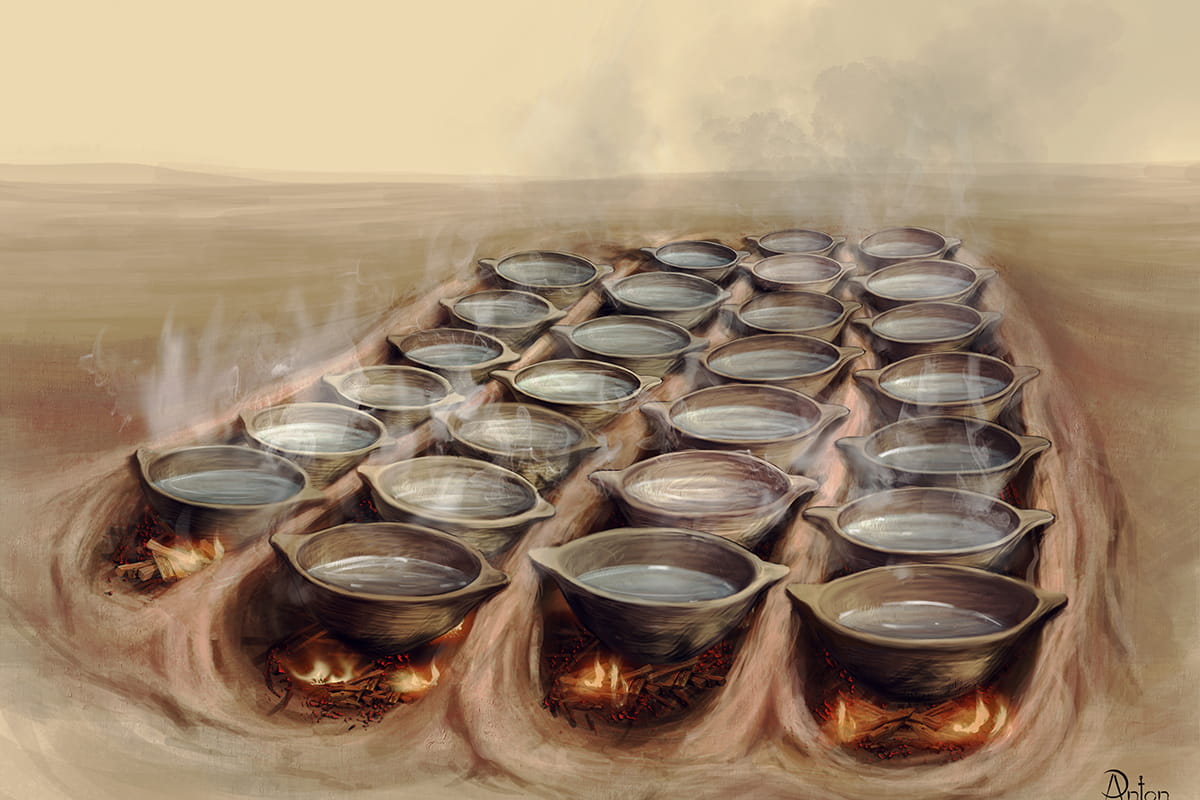
Salt was the driving force behind everything at Solnitsata.
Why was salt so important?
Humans require salt for survival: around 12–18 grams per day, depending on activity level. During the Neolithic era, when people shifted to a sedentary life and began raising animals, salt became crucial for:
- Preserving meat and food stores;
- Maintaining a year-round food supply;
- Processing animal skins;
- Feeding livestock;
Because salt could not be easily produced everywhere, communities that had access to natural salt deposits became powerful players in early trade networks.
Salt as Money
Before gold or metal currency existed, salt itself served as a medium of exchange. Unlike perishable goods, salt does not spoil and is universally needed, giving it a natural and stable value.
Salt from Provadia–Solnitsata was traded over long distances, and salt cakes or blocks may be considered some of the world’s earliest money-like commodities.
How Salt Was Produced: A Technological Marvel
Provadia–Solnitsata preserves the oldest salt-production installations in Europe, dating back more than 7,000 years.
Late Neolithic Period (5600 – 5200 BC)
Salt production began with brine boiling in clay-lined pits. Brine was heated in large underground ovens, using thick-walled ceramic vessels to evaporate the water and extract salt.
Early and Middle Chalcolithic (5200 – 4600 BC)
Production expanded significantly:
- New types of earthen installations were built.
- Brine was increasingly evaporated in larger “basins” heated by solar radiation.
- Production capacity grew, requiring less firewood per unit of salt.
Late Chalcolithic (4600 – 4350 BC)
This was the peak of industrial development:
- Massive deep-walled pits were constructed (some 10–15 meters long).
- Thick-walled ceramic bowls, often conical, were used.
- Salt cakes were standardized in size for easier transport and trade.
- Some installations produced 150-200 kg of salt per cycle; others produced several tons.
The sheer scale of production indicates an advanced level of social organization, engineering, and labor specialization.
Europe’s Oldest Stone Fortifications
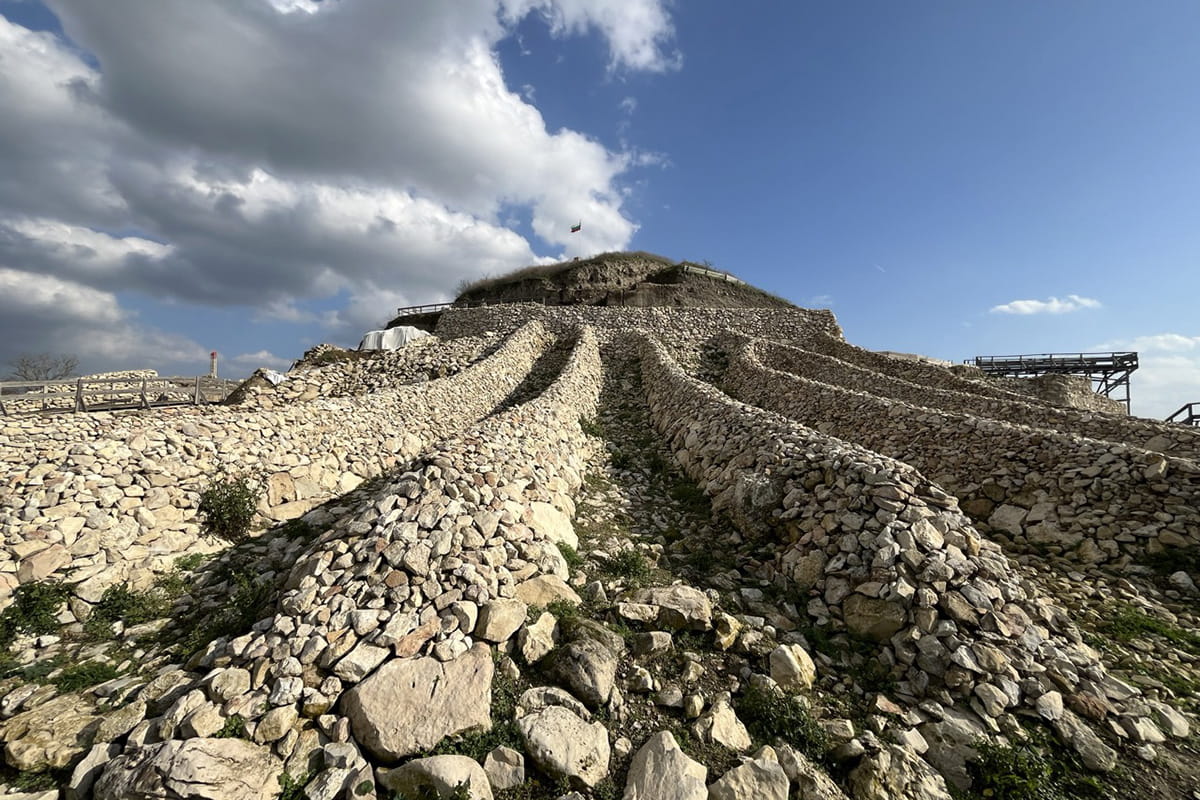
One of the most astonishing discoveries at Solnitsata is its complex system of defensive stone walls, which are the oldest known fortifications in Europe.
Highlights:
- Three successive fortification systems were constructed between 4700 and 4200 BC.
- Walls were made of massive stones, some more than 1.6 meters high.
- Fortifications formed a nearly circular enclosure around the settlement.
- A moat and thick defensive walls protected the community’s salt-based wealth.
- The engineering achievements are unmatched anywhere in Europe during this era.
Earthquakes destroyed earlier walls, and new, more advanced structures replaced them. This repeated rebuilding suggests high levels of organization and a community capable of mobilizing significant labor.
The Settlement Mound: Layers of History
The site includes a 9-meter-deep cultural layer, accumulated over nearly 2,000 years of continuous habitation.
Archaeologists have identified remains from:
- Late Neolithic (~1 m)
- Early, Middle, and Late Chalcolithic (~8 m)
- Early Bronze Age ritual burial layers
- The Thracian and Roman periods, including a large aristocratic residence
This long continuity makes Solnitsata one of the best-preserved prehistoric urban centers ever discovered.
📖 Read also: UNESCO Sights in Bulgaria: Historical Landmarks and Unique Customs
Religious Life and Ritual Practices
Excavations reveal a rich spiritual world, including:
- Anthropomorphic figurines (many stylized, decorated, or with drilled eyes).
- Zoomorphic figurines, including owls and other symbolic creatures.
- Ritual pits were used for fertility and domestic rituals.
- A Late Chalcolithic pit sanctuary covering more than 2 hectares.
- Family and individual burials within or near production areas.
Some burials included:
- Copper tools;
- Hammer axes;
- Ceramic vessels;
- Ritual objects;
This indicates social differentiation and specialized roles within the community.
What Daily Life Looked Like
Archaeological evidence paints a vivid picture of life at Solnitsata:
People lived in:
- Clay-plastered houses;
- Small rooms and larger production buildings;
- Fortified residential zones;
They practiced:
- Salt production;
- Cattle and animal husbandry;
- Ritual practices linked to fertility;
- Long-distance trade;
They used:
- Copper implements;
- Thick-walled ceramic vessels;
- Bone figurines;
- Early tools and adornments;
Their society:
- Was highly specialized;
- Showed signs of wealth stratification;
- Was organized around communal production;
- Built monumental fortifications;
Solnitsata was not a simple village; it was a proto-city, with technology, trade, and social complexity far ahead of its time.
Visiting Provadia–Solnitsata Today
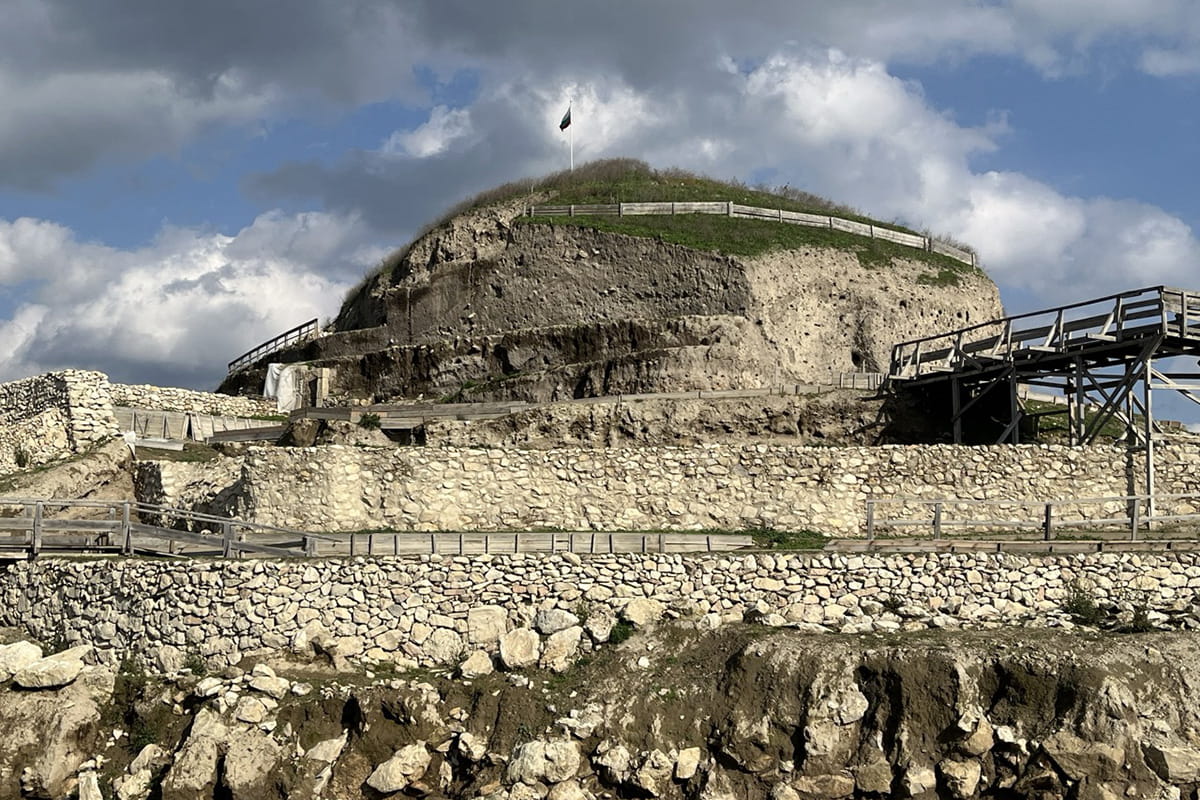
The site is open to visitors and located only a short drive from Varna or Shumen. A typical visit includes:
- Walking through the ancient fortifications
- Viewing salt-production pits
- Exploring reconstructions of prehistoric facilities
- Seeing real artifacts found on-site (in nearby museums)
- Learning from archaeological signage and local experts
The atmosphere is serene, historical, and incredibly immersive. Currently, there is no entrance fee; the site operates on donations from the visitors.
Frequently Asked Questions (FAQ)
1. How old is Provadia–Solnitsata?
The settlement was inhabited from 5600 to 4350 BC, making it around 7,500 years old, and 2,000 years older than the Egyptian pyramids.
2. Why is the site so important?
It contains the earliest:
- industrial salt-production installations in Europe
- stone fortifications on the continent
- urban-like settlement in prehistoric Europe
3. Where is it located?
Near the modern town of Provadia, in northeastern Bulgaria, about 50 km from Varna.
4. What can visitors see today?
Visitors can explore:
- Fortification walls;
- Production pits;
- Settlement mound;
- Reconstructions of prehistoric facilities;
- Archaeological displays;
5. How was salt produced?
Salt was obtained by boiling brine in ceramic vessels placed in underground furnaces and later in large stone-lined basins. This enabled the large-scale production of salt cakes used for trade.
6. Is Provadia–Solnitsata the same as the Varna Gold culture?
It is contemporaneous with, and related to, the Varna civilization, famous for producing the world’s oldest processed gold. Both cultures were part of a broader network of early complex societies in the region.
7. Can I visit Provadia–Solnitsata on a private tour?
Absolutely. We include it in our personalized Bulgaria and Balkan tours, which can be adapted to your interests in archaeology, culture, and history.
8. Where to stay near Provadia-Solnitsata?
We recommend the following accommodations within a driving distance of the prehistoric site:
- Grafit Gallery Design Hotel (Varna)
- mOdus Hotel (Varna)
- Family Hotel Business Club (Shumen)
Save this post to Pinterest: